What is Data as a Service (DaaS)? Explained
- Data as a Service providers manage the entire pipeline, sourcing raw information, removing duplicates and errors, structuring it into JSON or CSV, and delivering fresh data continuously.
- Differs from a one-time export or manual data pull, since delivery is continuous and automatically monitored for schema changes or gaps
- Removes the need to hire data engineers or manage scraping and ETL systems internally
- Scales with data volume without a proportional rise in headcount or technical overhead
- Built around five stages: source, clean, structure, deliver, monitor
- Works best for niche, complex, or frequently changing data that’s hard to collect reliably in-house
Most businesses now collect more data than their internal teams can clean, structure, and use effectively. Data as a Service exists to close that exact gap.
This guide breaks down what DaaS actually means, how it works behind the scenes, its real benefits, common adoption challenges, and how to choose a provider that fits your business.
This article draws on:
- Industry research and market reports on cloud-based data delivery models
- Conversations with businesses that rely on outsourced data pipelines
- Hands-on experience building and delivering managed data services to enterprise clients
APISCRAPY is referenced later in this article as a Data as a Service provider. This is disclosed upfront, and the comparison stays factual and neutral throughout.
The goal here is simple: help you understand DaaS well enough to decide if it fits your business, regardless of which provider you eventually choose.
How does DaaS work?
Data as a Service delivers ready-to-use data on an ongoing basis, rather than as a one-time file export or manual pull. Instead of building and maintaining data infrastructure internally, businesses receive continuously refreshed, structured data through a subscription-based service.
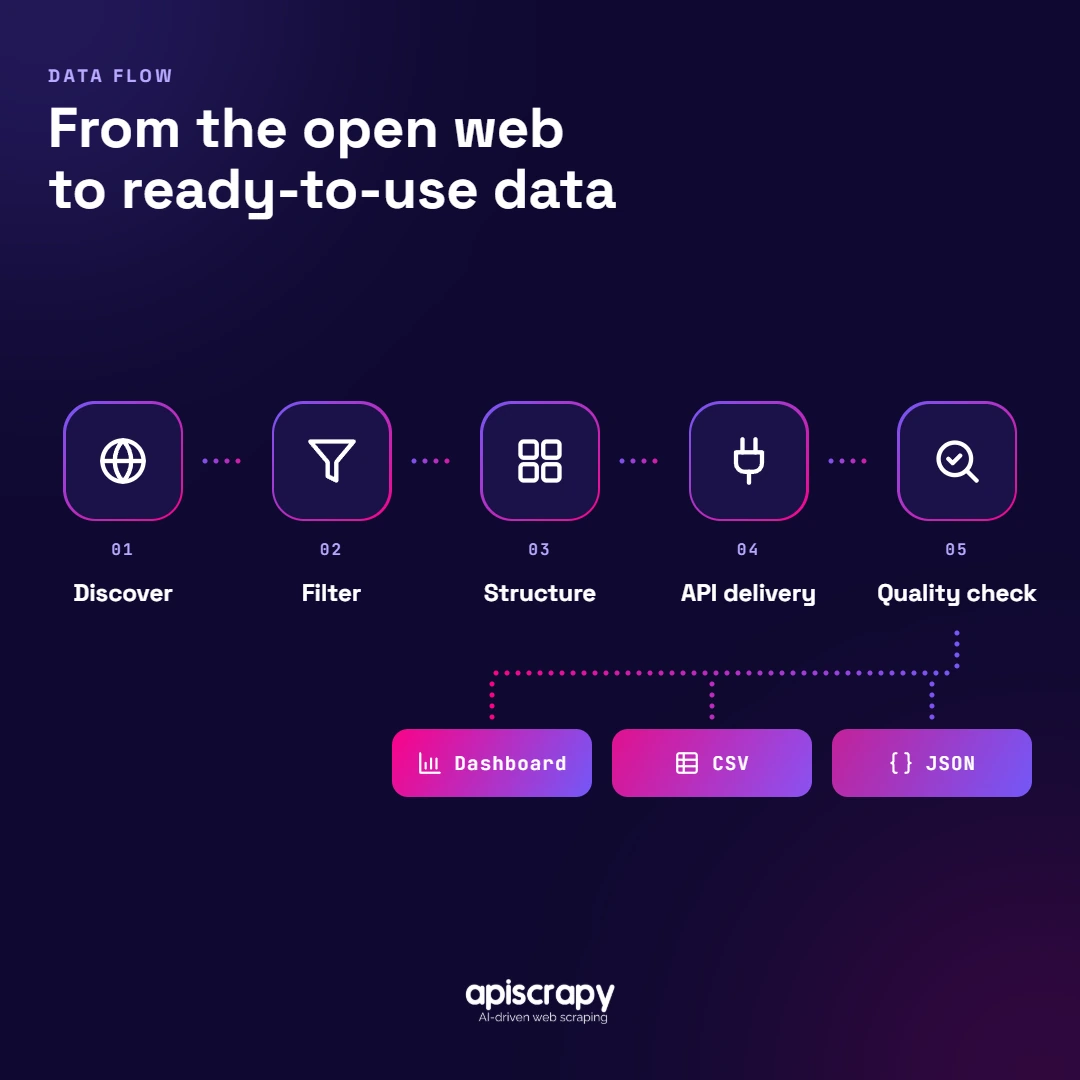
In practice, a DaaS provider handles the entire lifecycle. Raw data is sourced from relevant channels, cleaned to remove duplicates and errors, structured into a usable format, and then delivered through an API, a scheduled feed, or a dashboard, depending on the client’s workflow.
Behind this, the provider runs automated pipelines, cloud infrastructure, and monitoring systems that keep data accurate and current without requiring the client to manage servers, scrapers, or data engineers internally.
A typical DaaS workflow follows five stages:
- Source: Data is collected from websites, APIs, sensors, or internal systems depending on the use case
- Clean: Duplicate records, broken fields, and inconsistencies are removed automatically
- Structure: Raw data is organized into standardized, query-ready formats such as JSON or CSV
- Deliver: Structured data reaches the client via API, bulk export, or a live dashboard feed
- Monitor: Ongoing quality checks catch schema changes, gaps, or anomalies before they affect downstream systems
What are the key benefits of Data as a Service?
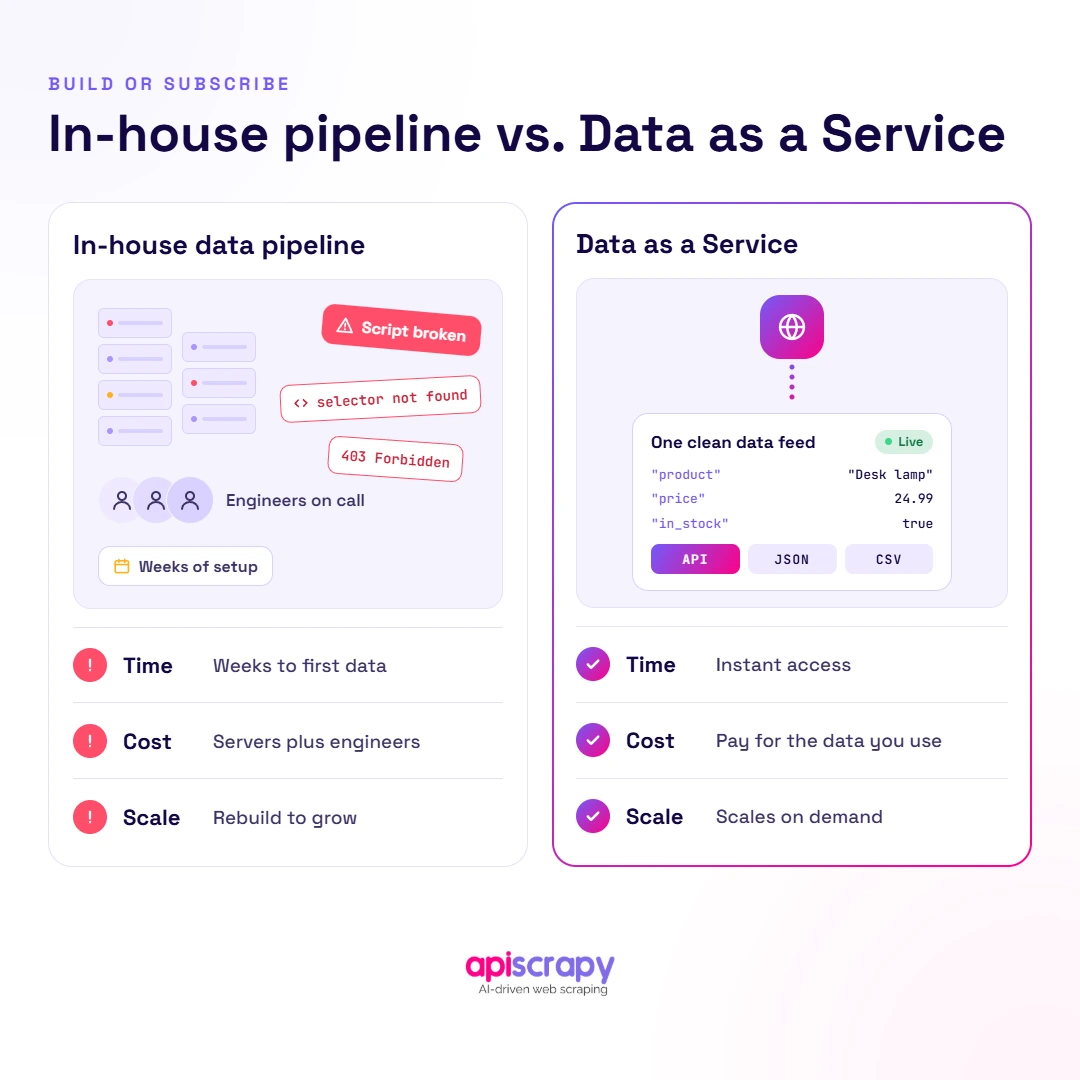
- Faster time to insight: Teams work with clean, structured data immediately instead of spending weeks building and debugging internal collection pipelines
- Lower operational cost: Businesses avoid hiring dedicated data engineers, purchasing infrastructure, and maintaining scraping or ETL systems in-house
- Scalability without added headcount: Data volume can grow significantly without requiring proportional increases in internal team size or technical overhead
- Consistent data quality: Providers apply standardized cleaning and validation rules, reducing the errors common in ad hoc, manually collected datasets
- Built-in compliance awareness: Established DaaS providers structure collection processes around privacy regulations and site-level access rules, reducing legal exposure
- Access to niche or hard-to-reach data: Specialized providers can source data from complex, JavaScript-heavy, or frequently changing sources that are difficult to collect internally
What Are the Biggest Challenges Businesses Face When Adopting DaaS?
DaaS solves real operational problems, but adoption is not automatically frictionless. New dependencies and risks appear the moment a business hands data collection to an outside provider.
- Data quality and consistency: Not all providers apply the same validation standards, and inconsistent formatting across sources can quietly break downstream reporting and models
- Integration complexity: Connecting a provider’s delivery format to existing CRMs, warehouses, or BI tools often requires engineering effort that businesses underestimate upfront
- Vendor dependency: Relying heavily on one provider for critical data can create switching costs and limited negotiating leverage over time
- Compliance and legal exposure: Data sourced without proper regard for privacy laws or site terms can expose the buying business to risk, not just the provider
- Cost unpredictability at scale: Usage-based pricing models can become expensive quickly once data volume or query frequency grows beyond initial estimates
Most of these challenges are manageable with the right provider. The differentiator is usually how transparent, compliant, and technically mature that provider’s process actually is.
Start Building Your Web Crawler Today
Conclusion
Data as a Service removes the operational weight of sourcing, cleaning, and maintaining data in-house, letting businesses focus on using data instead of managing its collection.
The right choice depends less on price alone and more on data quality, compliance practices, and how reliably a provider delivers at scale over time.
If you are evaluating whether DaaS fits your business, the fastest way to find out is to book a demo and test it against a real use case
Frequently Asked Questions About Data as a Service
How is Data as a Service different from SaaS, PaaS, and DBaaS?
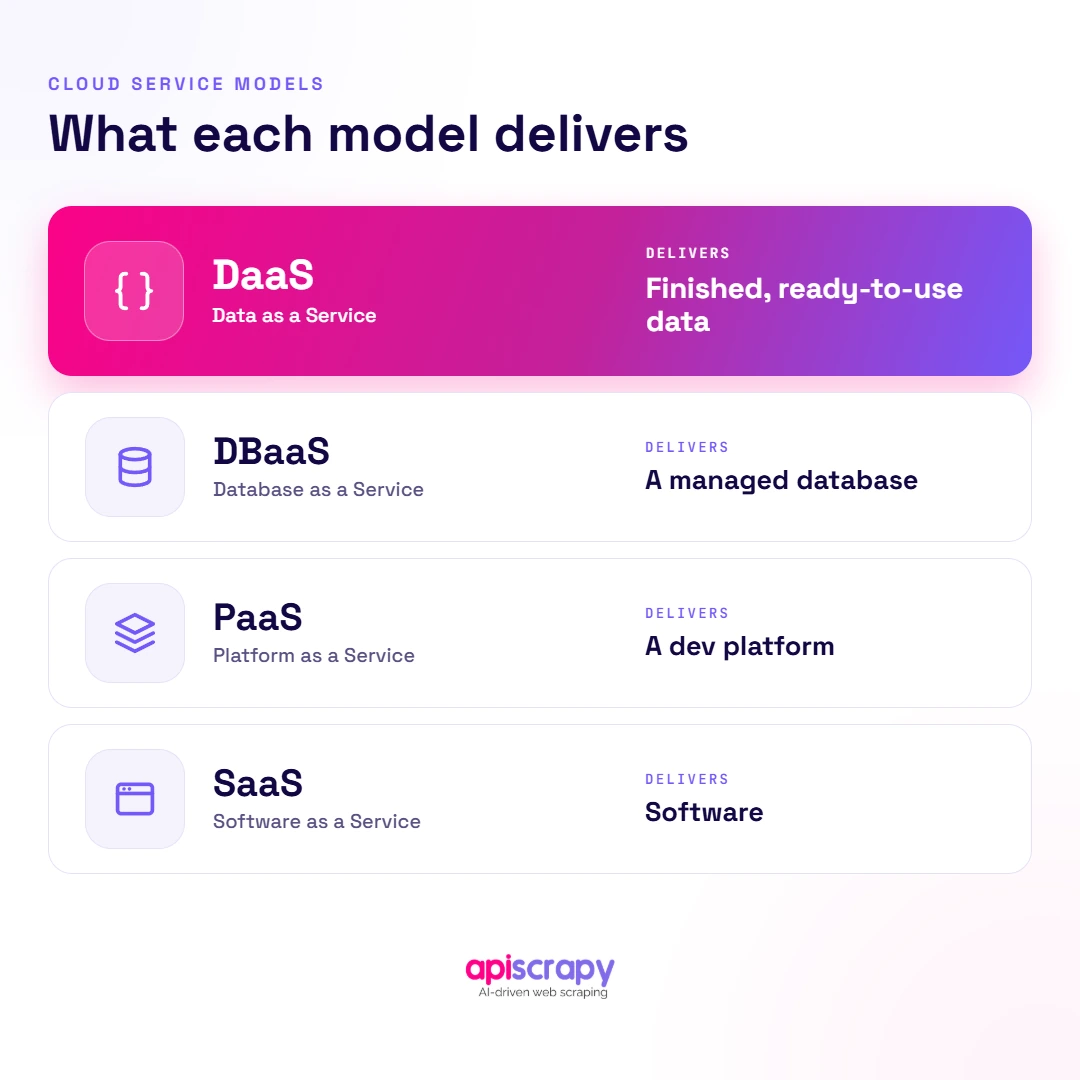
SaaS delivers software functionality, PaaS delivers a development environment, and DBaaS delivers managed database infrastructure for teams to build on. DaaS is different because it delivers the finished data itself, cleaned and structured, rather than the tools or infrastructure needed to produce that data internally.
How can businesses ensure data quality, security, and reliability when using a DaaS service?
Start by asking providers about their validation process, update frequency, and how they handle schema or source changes over time.
What are the most common Data as a Service use cases for modern businesses?
Common use cases include competitive price monitoring, market research, lead generation, and feeding real-time data into AI and analytics models. Retail, finance, and e-commerce businesses use DaaS most heavily, since these industries depend on constantly refreshed external data to stay competitive and responsive to market shifts.