7 Best AI Web Scraping Tools
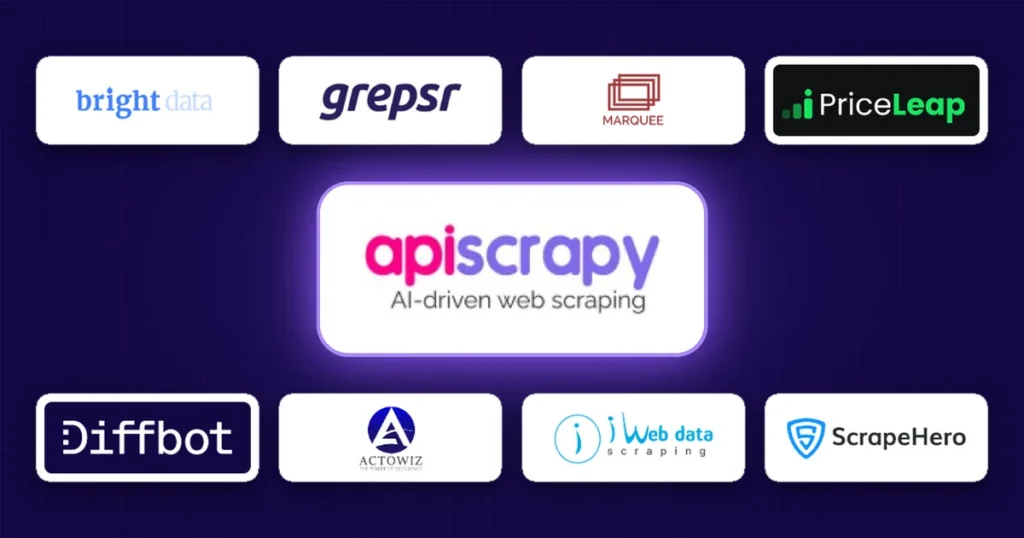
The Best AI Web Scraping Tools go far beyond simple HTML extraction. Modern websites use adaptive anti-bot defenses, dynamic rendering, and constant layout changes that can break traditional scrapers overnight. AI-powered tools adapt to these changes, making accuracy, reliability, and self-healing extraction more valuable than raw scraping speed when choosing the right solution.
This guide breaks down the seven strongest AI web scraping tools, based on:
- Analysis of vendor documentation, pricing pages, and verified reviews across G2, Trustpilot, and developer communities
- Evaluation of AI-based extraction accuracy, self-healing selectors, anti-bot handling, and JavaScript rendering support
- Comparison of managed versus self-serve workflows, output formats, delivery frequency, and quality assurance processes
- Review of pricing models and scalability for solo developers, growing teams, and enterprise data operations
PriceLeap is our own product and appears in this list as the tool we build and maintain. Its placement reflects our documented feature set, not a paid slot, and every comparison made against the other six tools below relies on their public pricing pages, documentation, and independently verified customer reviews rather than our own opinion of them.
All tool descriptions and comparisons rely on publicly available documentation, verified customer feedback, and documented performance outcomes.
Vetting Methodology: How We Evaluated These Web Scraping Services
We scored every service on the same six weighted criteria, drawing on vendor documentation, public pricing pages, and verified reviews from G2, Capterra, Trustpilot, and developer communities like r/webscraping.
| Criterion | Weight | What We Checked |
|---|---|---|
| Anti-Bot Handling and Success Rate | 25% | How each service handles proxy rotation, CAPTCHA solving, and JavaScript rendering, measured against documented success rates and user reports on heavily protected sites. |
| Data Quality and Structured Output | 20% | Whether clean JSON, CSV, or database-ready records are delivered instead of raw HTML, and what QA and validation happen before delivery. |
| Pricing Transparency and Scalability | 20% | Cost per usable record, credit multipliers for JavaScript rendering or premium proxies, rollover rules, and how pricing behaves as volume grows. |
| Ease of Use and Workflow Model | 15% | Setup effort for technical and non-technical teams, and whether the managed or self-serve model matches how the vendor positions itself. |
| Compliance and Security Posture | 10% | Published GDPR, CCPA, and SOC 2 commitments, and how clearly the vendor explains its handling of personal and protected data. |
| Support and Verified User Feedback | 10% | Available support channels and response times, weighed against verified reviews on G2, Capterra, Trustpilot, and developer forums. |
| Total | 100% |
Each service was scored 1 to 5 on every criterion, and the weighted scores determined its final ranking.
Which AI Web Scraping Tool Wins the 2026 Comparison?
| Tools | Best For | Rating (Source) | Coding Needed | Starting Price |
|---|---|---|---|---|
| Priceleap | Managed, compliance-ready AI data extraction for enterprises | 4.2/5 | No | Start from $89 |
| ScrapeHero | Enterprise-grade managed scraping across e-commerce, finance, real estate, jobs | 4.7/5 (G2/Capterra) | No | $5/mo (Cloud) / $550+ (managed, per site/refresh) |
| Grepsr | Fully managed extraction with AI-assisted QA and human oversight | 4.5-4.8/5 (G2/Capterra) | No | $350 (one-time Starter Pack) |
| Bright Data (Managed Tools) | Enterprise scraping backed by the world’s largest proxy network | 4.6/5 (G2), 4.8/5 (Capterra) | Some | $499/mo |
| iWeb Data Scraping | Managed pipelines crawling 30M+ pages/day, 99.4% field-level accuracy | Not independently rated | No | Custom quote (unpublished) |
| Actowiz Solutions | Scalable, fully managed extraction from 1,000+ platforms | 4.9/5 (GoodFirms, unverified) | No | $500/mo |
| Marquee Data | Custom web scraping solutions for enterprises, US-based | 5.0/5 (G2, 9 reviews) | No | $200/mo (recurring) / $250 (one-time) |
| Diffbot | AI-powered extraction via computer vision into a Knowledge Graph | 4.9/5 (G2) | No | Free (10K credits) / $299/mo |
Detailed Breakdown of Each Service
1. Priceleap
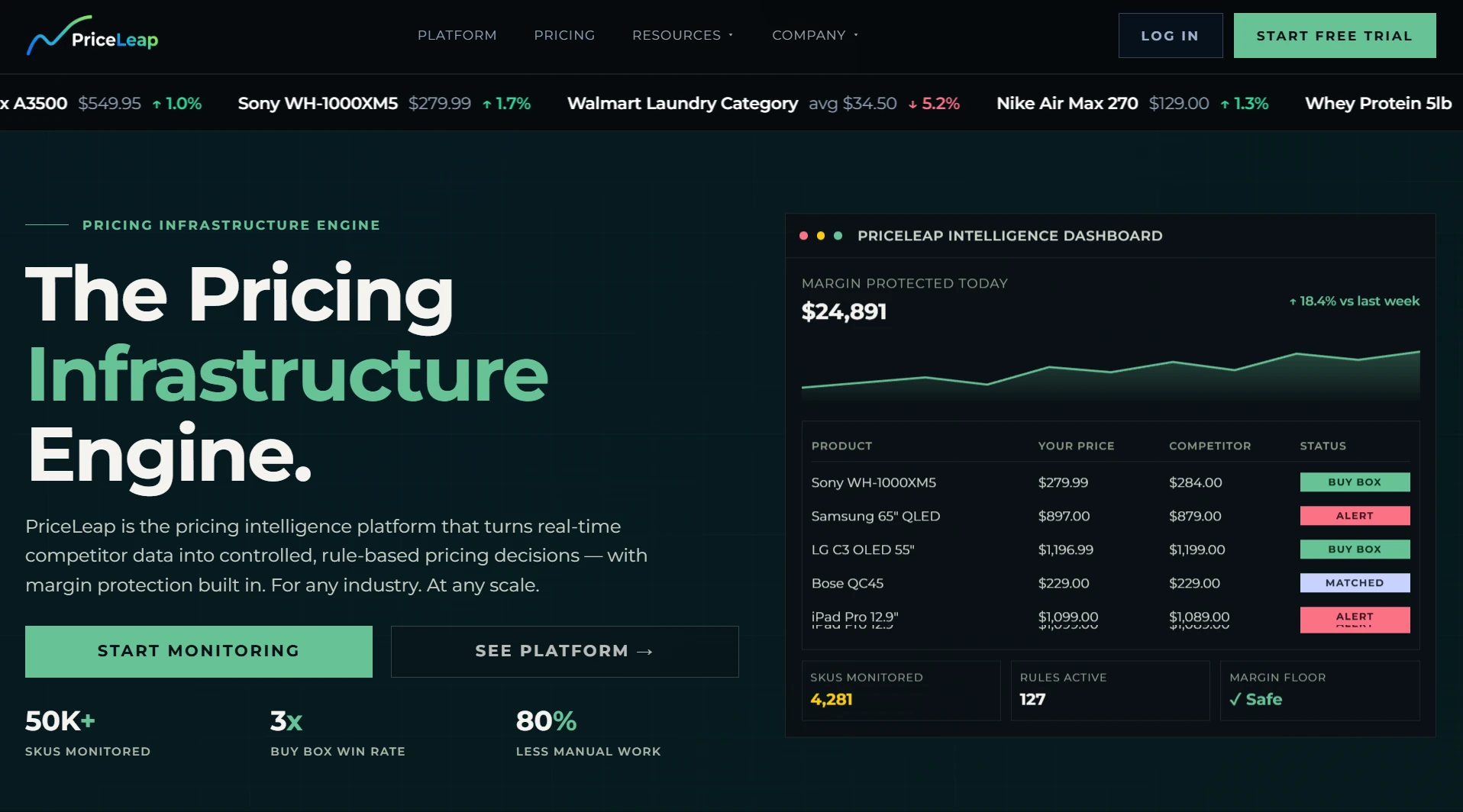
PriceLeap uses AI-powered web scraping under the hood to collect competitor pricing data, but scraping is the means, not the product. What PriceLeap actually delivers is pricing intelligence and MAP monitoring: alerts, compliance dashboards, and pricing insights that teams act on directly. It isn’t built or sold as a standalone scraping tool, and it doesn’t hand developers raw or structured data to build with. The data collection layer exists purely to power the insights layer, which is where the real value sits.
Features
- AI-powered managed data extraction with compliance-first architecture
- No-code setup with dedicated onboarding support
- Server-side rendering for JS-heavy pages, improving AI/LLM citation visibility
- Delivers structured data via API, CSV, JSON, or direct warehouse integration
Pros
- Lowest published entry price in the managed-Platform category
- Verified third-party rating (Techjockey) where several competitors have none
- Compliance-ready positioning appeals to regulated industries
- No coding required, fast time-to-first-dataset
Cons
- Less brand recognition than Bright Data or Diffbot in enterprise circles
- Fewer public case studies compared to 10+ year incumbents like ScrapeHero
Pricing: Starts at $89 tiered plans scale with data volume and refresh frequency.
2. ScrapeHero
ScrapeHero uses AI and machine learning to catch data quality issues before they turn into bigger problems. Its scrapers adapt automatically to layout changes, reducing the manual patching most teams try to avoid. This makes it a solid choice for teams that want AI managing data integrity within a fully managed pipeline.
Features
- Fully managed scraping with automated QA checks
- Pre-built coverage for e-commerce, finance, real estate, and job data
- Handles JavaScript/AJAX rendering, CAPTCHA, and IP blacklisting transparently
- Also offers a self-serve Cloud marketplace with pay-as-you-go scrapers
Pros
- Long track record (15,000+ customers) and strong G2/Capterra reviews (4.7/5)
- Flexible: choose between self-serve Cloud or fully managed enterprise service
- Broad industry coverage out of the box
Cons
- Managed Platformpricing starts far higher than the advertised $5/mo Cloud tier ($550+ per site/refresh)
- Credit-based billing on Cloud plans can be unpredictable on JS-heavy sites
Pricing: $5/mo (Cloud, self-serve) or $550+ per website per refresh (managed enterprise service).
3. Grepsr
Grepsr is an AI web scraping platform that combines a dedicated AI Data Extraction & Transformation product with AI-assisted QA across every dataset. Its AI models help automate extraction and processing, while a separate no-code tool, Pline by Grepsr, lets users pull data from any page using AI. This gives teams both a managed AI extraction platform and a self-serve AI tool under one roof.
Features
- Concierge, fully managed extraction model with dedicated account manager
- AI-assisted QA layered with human oversight before delivery
- Flexible delivery: API, cloud storage, or direct integration
- 14+ years serving 1,500+ enterprises
Pros
- Rare transparency: publishes a real starting price instead of “contact us”
- Strong review volume and rating (4.5-4.8/5 across G2 and Capterra)
- Good fit for recurring, complex, or dynamic-site extraction
Cons
- One-time Starter Pack ($350) is entry-level only; recurring plans run $2K-$20K/month
- Custom recurring pricing still requires a sales call to finalize
Pricing: $350 one-time Starter Pack; recurring enterprise plans typically $2,000-$20,000/month.
4. Bright Data (Managed Tools)
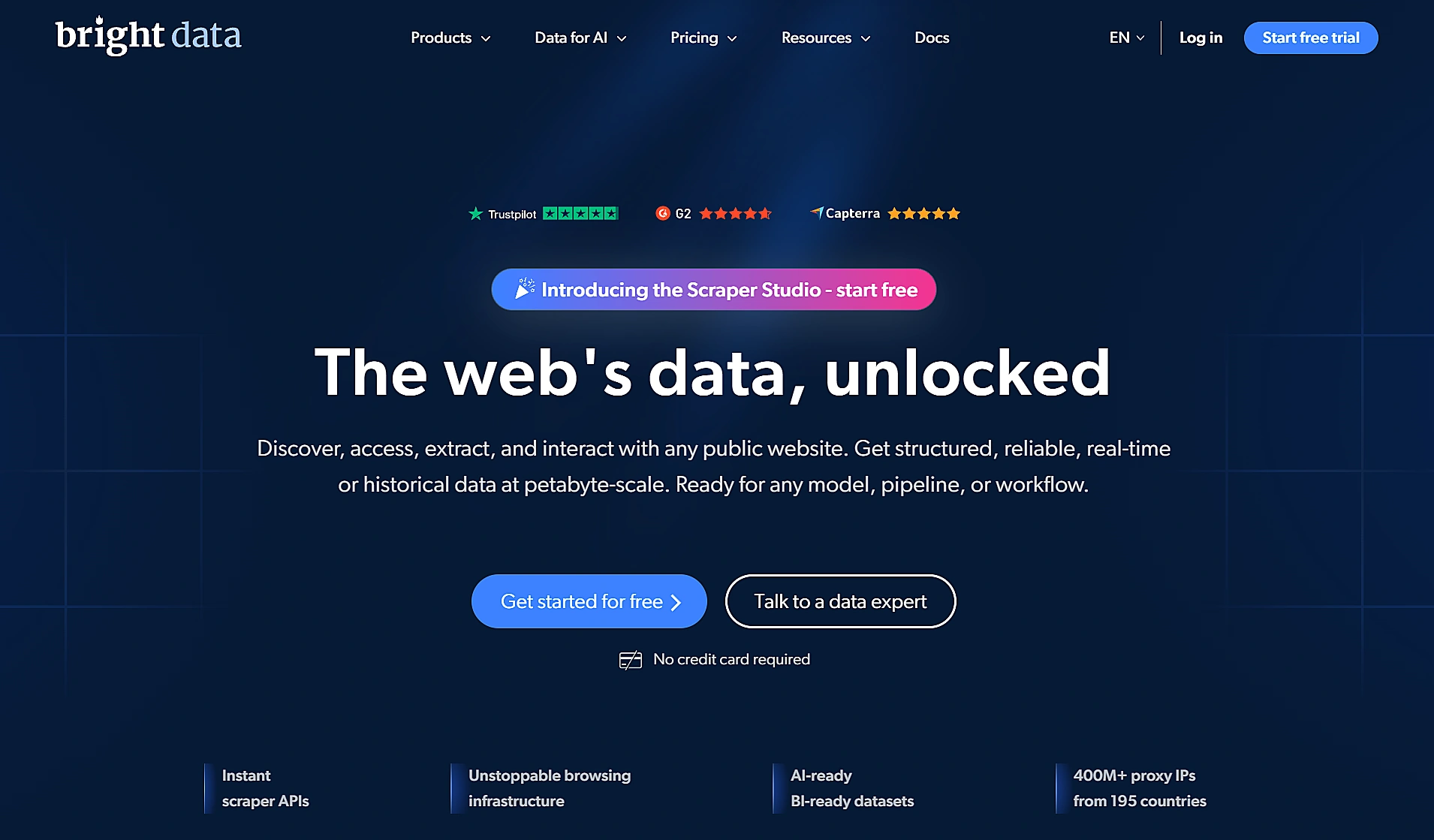
Bright Data is an AI-native web scraping platform built around its AI Scraper Studio, which converts websites into structured data pipelines. It also runs an MCP server that lets AI agents browse and scrape autonomously. This makes it one of the more developer-focused platforms for teams building their own scraping workflows.
Features
- World’s largest proxy network (72M+ IPs) backing managed extraction
- Success-based/pay-only-for-delivered-results pricing available
- 437+ pre-built scrapers across major e-commerce, social, and travel platforms
- 99.99% uptime SLA and multiple compliance certifications (GDPR, CCPA, ISO 27001)
Pros
- Best-in-class infrastructure scale and reliability for enterprise workloads
- Strong reviews across G2 (4.6/5), Capterra (4.8/5), and Trustpilot (4.4/5)
- Serves Fortune 500 clients, proven at massive scale
Cons
- Higher starting price than most managed-Platform peers ($499/mo)
- Can be overkill and costly for small or single-site scraping needs
Pricing: From $499/month; pay-per-successful-result options also available.
5. iWeb Data Scraping
iWeb Data Scraping is an AI-powered platform that uses machine learning to automate data quality checks and self-healing scraper maintenance. Its systems monitor for site structure changes and flag issues before they disrupt data delivery. This gives clients AI-backed reliability inside a fully managed scraping operation.
Features
- Managed extraction pipelines processing 30M+ pages daily
- 99.4% field-level accuracy backed by QA checks
- ISO 9001 and ISO 27001 certified processes with NDA-first engagements
- Free sample dataset delivered within 48 hours of a requirements call
Pros
- Fast sample turnaround builds early trust before commitment
- Strong compliance/certification story for cautious enterprise buyers
- Flexible delivery formats including direct warehouse integration
Cons
- No published pricing or independent G2/Capterra rating available
- Harder to comparison-shop without a sales conversation
Pricing: Custom quote; pricing not publicly disclosed.
6. Actowiz Solutions
Actowiz Solutions is an AI web scraping platform that combines LLM-based attribute extraction, computer vision for product matching, and GPT-based analytics to convert raw web data into structured insights. Its AI models take on classification, sentiment analysis, and reporting on top of standard extraction. This makes it a strong fit for e-commerce and retail teams that need data intelligence, not just raw scraping output.
Features
- Fully managed enterprise-grade scraping across 1,000+ platforms
- Coverage spans e-commerce, food delivery, real estate, and travel pricing
- Free sample (500 rows) delivered within 2 hours of a request
- US-based support with offices in New York and California
Pros
- Fast, low-friction free sample offer lowers evaluation risk
- Transparent published starting price ($500/mo), unusual for this tier
- Broad vertical coverage for niche use cases (quick commerce, OTAs)
Cons
- Independent ratings are thin; one cited GoodFirms review is from an Actowiz staffer, not a verified customer
- Per-site pricing model means real costs vary widely project to project
Pricing: Plans from $500/month; per-site quotes scale with anti-bot complexity and volume.
7. Marquee Data
Marquee Data takes a fully managed, human-built approach to web scraping rather than an AI-driven one. A dedicated team writes custom scraping programs for each client’s specific target sites and delivers structured data in CSV, JSON, or Excel. This makes it a strong option for businesses with complex or one-off scraping needs who want a human expert handling the work, not a self-serve AI platform.
Features
- Custom, fully managed web scraping solutions for enterprise clients
- US-based team handling both one-time and recurring extraction needs
- Data delivered in structured, ready-to-use formats
Pros
- Lowest published recurring starting price in this comparison ($200/mo)
- Perfect 5.0/5 rating on G2, though based on a small sample (9 reviews)
- Low one-time entry cost ($250) makes it easy to pilot
Cons
- Small review sample size makes the rating less statistically reliable
- Less public information on scale/infrastructure compared to Bright Data or ScrapeHero
Pricing: $250 one-time scrape; $200/month for recurring extraction.
8. Diffbot
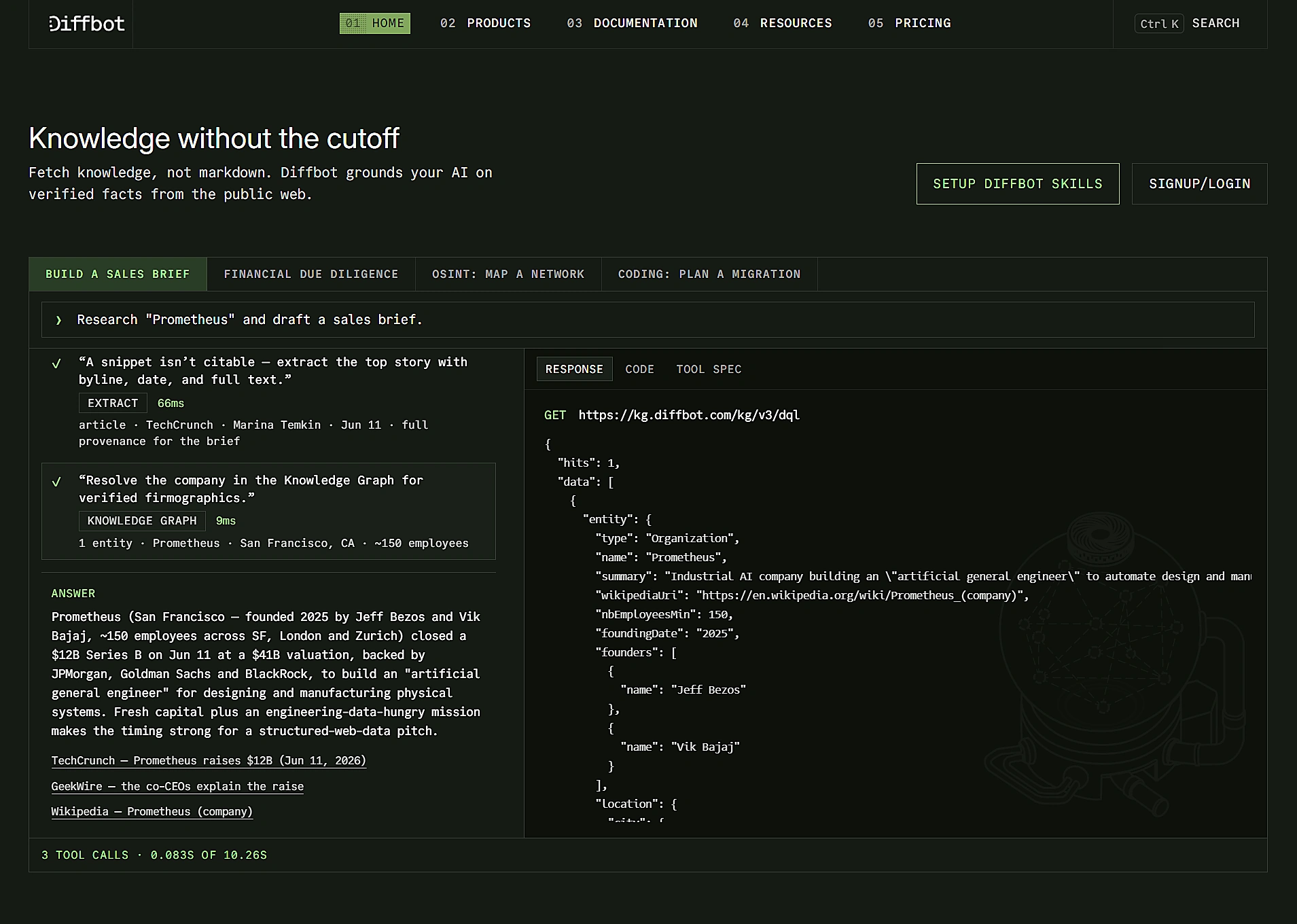
Marquee Data takes a fully managed, human-built approach to web scraping rather than an AI-driven one. A dedicated team writes custom scraping programs for each client’s target sites and delivers structured data in CSV, JSON, or Excel. This makes it a strong option for businesses with complex or one-off scraping needs that want a human expert handling the work, rather than a self-serve AI platform.
Features
- Computer-vision-based extraction rather than traditional CSS/HTML scraping
- Converts web pages into a structured Knowledge Graph
- Reads pages the way a human would, reducing breakage from layout changes
Pros
- Highest-rated Platform in this comparison (4.9/5 on G2)
- Free tier (10,000 credits) allows real testing before paying
- Resilient to site redesigns since it doesn’t depend on fixed selectors
Cons
- Positioned more as an AI/semantic data product than a traditional “done-for-you” service
- $299/mo jump from free tier is steep relative to Grepsr or Marquee Data’s entry points
Pricing: Free (10,000 credits); paid plans start at $299/month.
Why Is AI Web Scraping Tools Replacing Traditional Web Scraping Tools?
Traditional scrapers are built on CSS selectors and XPath rules that map to one specific version of a page’s HTML. Ship a redesign, add a new class name, or reorder a div, and that same scraper quietly returns nothing or garbage data.
AI web scraping Tools solve this by using a large language model to understand a page’s content semantically instead of matching its markup. Tell it to “get the product price and availability” and it keeps finding that information even after the site’s design changes underneath it.
- Selector maintenance eats more engineering time than building new scrapers from scratch
- JavaScript-heavy single-page Platform return empty HTML shells to old-school HTTP requests, so rendering has to happen somewhere
- Natural language prompts let non-developers set up extraction jobs that used to require a Python script
- AI output arrives already structured and clean, which matters when the destination is an LLM pipeline or a database, not a spreadsheet someone has to tidy up by hand
What are the Benefits of Using AI Web Scraping Tools
The biggest benefit is durability. An AI scraper degrades gracefully when a site changes, where a selector-based scraper just breaks, and that alone can save a data team dozens of hours a month that used to go into rewriting broken jobs.
- Adapts to layout changes without a code deploy
- No-code setup through plain-English prompts or visual schemas
- Native JavaScript rendering for SPAs, infinite scroll, and lazy-loaded content
- Clean, structured output (JSON, CSV, markdown) ready for a database or an LLM
- Faster time to first dataset, often minutes instead of days
- Lower total cost of ownership at scale, once you factor in engineering hours saved, even when the per-page API cost looks higher on paper
For teams already running compliance-heavy operations, managed Tools like APISCRAPY add GDPR and ISO 27001-aligned handling on top of the AI extraction layer, which matters once the data includes anything personal.
How AI Web Scraping Tools Works?
Most AI web scraping and AI data extraction Tools follow a similar pipeline under the hood, even when the interface looks completely different.
- You describe what you want, either as a plain-English prompt or a JSON schema, no CSS selectors involved
- The Platform fetches the target page, usually through a headless browser so JavaScript actually renders
- A language model reads the rendered content and matches it against your request, the same way a person skimming the page would
- It returns the result as structured JSON, CSV, or markdown, ready to load into a spreadsheet, database, or AI app
- On the next run, the Platform reuses your original prompt or schema, so it keeps working even after the page’s HTML structure has shifted
The heavy lifting (proxy rotation, retries, CAPTCHA handling) happens behind the API call, which is really the whole point of paying for one of these Tools instead of building it yourself.
How to Choose the Right AI Web Scraping Tools?
The “best” Platform depends entirely on who’s using it and what they’re scraping, not on whatever tops a review site’s homepage that week.
- Technical skill level: do you need a web scraping API or a point-and-click interface
- Scale: a few hundred pages a month is a different problem than millions
- Site difficulty: JS-heavy pages, login walls, and anti-bot protection all raise the bar
- Pricing model: credit-based, cost-per-page, or flat monthly, and how that scales with your actual volume
- Compliance needs: GDPR, SOC 2, or industry-specific rules if you’re touching personal data
- Support: whether you need a dedicated account manager or you’re fine with documentation and a community forum
If you’re not sure where you land, start with a free tier, run your actual use case through it, and see whether the output is clean enough to use without extra cleanup
What Is the Reddit Community Saying About AI Web Scraping Tools?
A recent thread in a web scraping community put it plainly: most people asking about AI scrapers weren’t worried about model quality at all, they wanted to know if the “adapts to site changes” claim holds up once a site throws anti-bot defenses at it.
Traditional Tools haven’t disappeared, they’re just now paired with an AI layer for the parsing step rather than doing it alone.
Start Building Your Web Crawler Today
Conclusion
AI web scraping Tools have genuinely changed what’s possible for teams that don’t have a dedicated data engineering function, and even for teams that do. The seven Tools above cover most budgets and skill levels, from Firecrawl’s developer-first API to Octoparse’s point-and-click builder to Priceleap’s fully managed, compliance-ready pipeline.
Pick the one that matches your technical comfort and your data volume, not the one with flashiest homepage. If you want to see how a managed AI scraping pipeline handles your specific target sites, book a demo and we’ll walk through it together using your actual use case.
FAQs
What makes AI web scraping Tools different from traditional web scraping Tools?
Traditional scrapers rely on fixed CSS selectors or XPath rules tied to one version of a page's HTML. AI web scraping Tools use a language model to read the page semantically, so they keep extracting the right data even after a site redesigns its layout.
What are the main benefits of using AI web scraping Tools?
The main benefits are automatic adaptation to layout changes, no-code setup through plain-English prompts, native JavaScript rendering, and clean structured output that's ready for a database or an LLM pipeline without extra cleanup.
How do AI web scraping Tools handle JavaScript-heavy or frequently updated websites?
Most Tools run a headless browser to fully render JavaScript before extraction starts, so single-page Platform and infinite scroll pages aren't a problem. Because the AI reads content semantically rather than matching fixed selectors, frequent layout updates don't break the job the way they would with a traditional scraper.
How much do AI web scraping Tools cost in 2026?
Pricing ranges from free tiers, roughly 1,000 to 50,000 pages a month on Tools like Firecrawl or ScrapeGraphAI, up to $500 or more a month for enterprise proxy networks like Bright Data. Managed, outcome-based Tools like APISCRAPY typically price per page load or per project instead of a flat subscription.
How do I choose the right AI web scraping Platform for my business?
Match the Platform to your technical skill level, monthly page volume, and the difficulty of your target sites, including JavaScript rendering, anti-bot protection, and login walls. If you handle personal data, also check for GDPR, SOC 2, or ISO 27001 compliance before committing to a plan.