Enterprise Web Scraping Services: Pricing and ROI for 2027
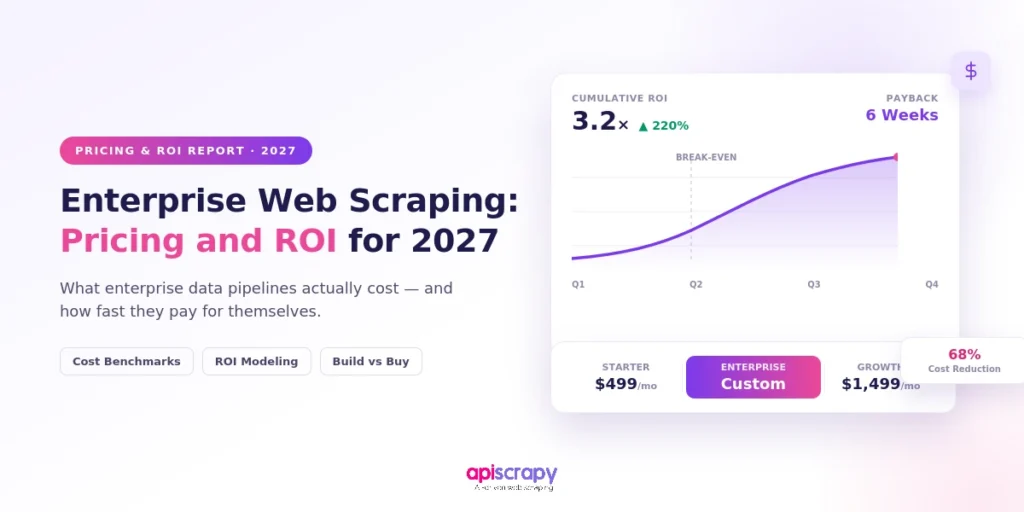
Once web scraping becomes a mission-critical data operation, pricing is about far more than the headline subscription fee. Enterprise web scraping costs can vary with data volume, source complexity, crawl frequency, infrastructure, compliance requirements, delivery needs, and the level of ongoing maintenance required. Before signing a contract, look beyond the sticker price and choose a pricing model that aligns with your scale, reliability expectations, compliance obligations, and in-house capabilities—so your data pipeline delivers lasting business value instead of becoming an expensive operational burden.
- Pay-as-you-go APIs: Roughly $0.001 to $5 per 1,000 requests. Best for low-volume or developer-led projects.
- Monthly subscriptions: Roughly $49 to $999+ per month. Best for mid-size teams with predictable volume.
- Proxy-based infrastructure: Roughly $4 to $14 per GB. Best for teams that want raw bandwidth and will own the rest.
- Managed enterprise services: Custom, often outcome-based pricing. Best when you need SLAs, compliance handling, and zero maintenance.
- Hidden costs: Broken scrapers, proxy fees, and engineering hours never appear on an invoice but quickly outweigh the savings of DIY.
- ROI formula: Value generated, minus total cost, divided by total cost. Count setup, maintenance, and support on the cost side.
- Vet any provider on five points: Data quality checks, scalability, compliance, a written SLA, and integration with your warehouse or BI tool.
- Past the pilot stage? A managed provider like APISCRAPY delivers production-ready data without the infrastructure burden.
Enterprises now treat web data as core infrastructure, not a side project, and pricing questions surface fast once scraping moves past a single internal script.
This guide breaks down what enterprise web scraping services cost, how to calculate ROI, and how to evaluate a provider against your scale and compliance needs.
This guide was built by comparing current vendor pricing, industry market data, and hands-on evaluation of managed versus self-service data collection models:
- Reviewed published pricing across managed services, proxy-based platforms, and self-service APIs
- Cross-checked figures against independent market research on the web scraping industry
- Weighed compliance, SLA, and support differences that pricing pages rarely spell out
APISCRAPY, a managed web scraping and data-as-a-service provider, is referenced throughout this guide as one option among several enterprise-grade services.
The goal here is simple: help you match your data needs to the right pricing model and service, whichever provider you end up choosing.
What Is Enterprise Web Scraping?
Enterprise web scraping is the large-scale, ongoing collection of public web data, delivered as clean, structured datasets rather than raw HTML pages.
It serves data, business intelligence, pricing, and competitive intelligence teams that need continuous feeds rather than a one-time export.
In practice, that data flows into pricing engines, market dashboards, and product catalogs, refreshed daily or hourly depending on the use case.
Why Do Enterprises Need Web Scraping Services?
Competitive pressure, pricing volatility, and faster product cycles are pushing enterprises to treat web data as a live input rather than a quarterly research exercise.
Independent market research puts the global web scraping industry at roughly a billion dollars and growing at a double-digit annual rate, with the large majority of major retailers already running automated price monitoring.
Manual or ad hoc collection cannot keep pace once volume passes a few thousand pages a week, and the labor cost climbs quickly from there.
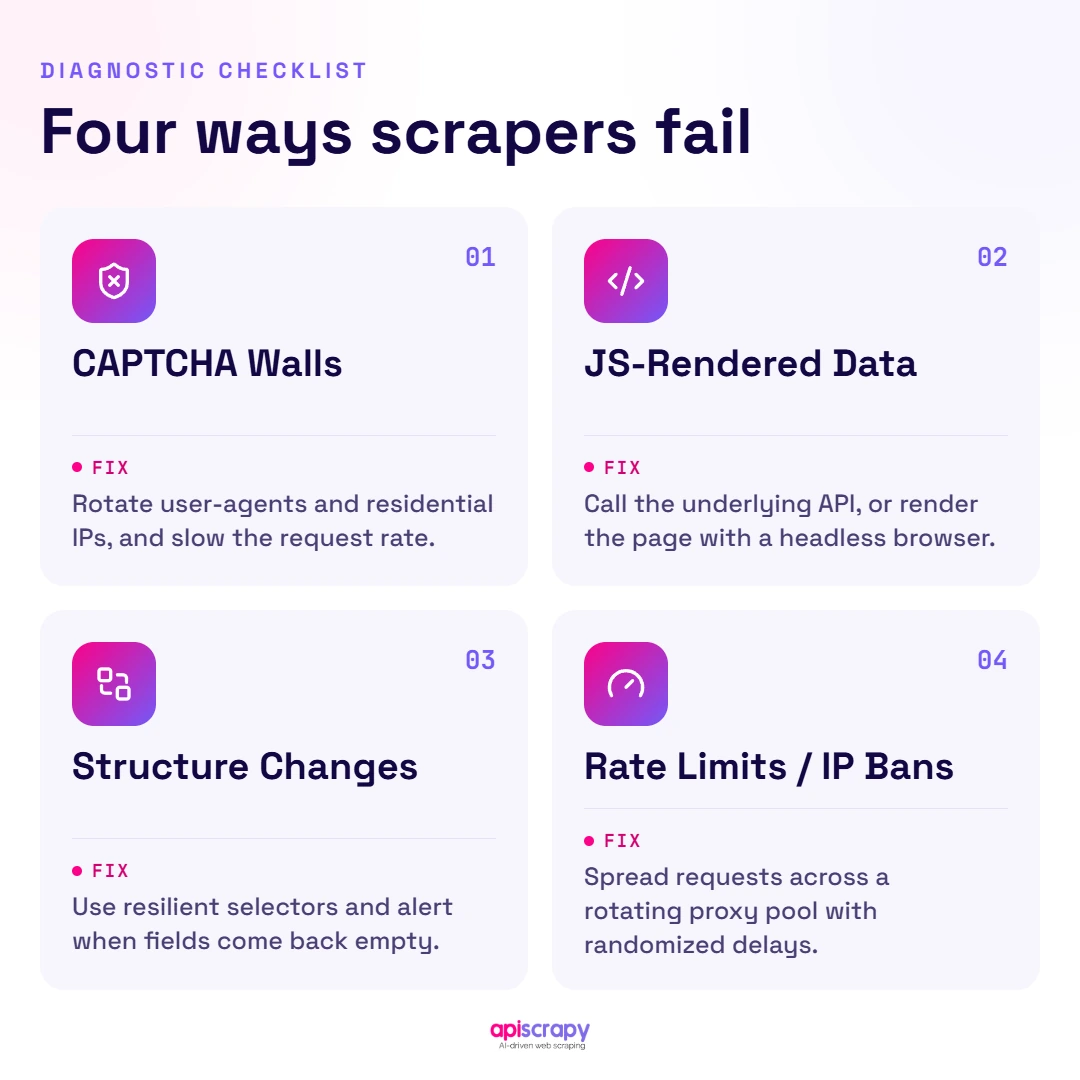
In-house scripts also break the moment a target site changes its layout, and few internal teams have the bandwidth to rebuild scrapers, rotate proxies, and monitor for blocks around the clock.
Enterprises need proof that data is fresh, complete, and delivered on schedule, not just a script that runs most of the time.
Teams that move from DIY scripts to a managed service often describe the same relief: no more silent failures discovered days after a competitor’s price change already hit the market.
What Are the Key Benefits of Enterprise Web Scraping Services?
- Real-time pricing and competitive intelligence that shortens decision cycles across merchandising and sales
- Scalable data pipelines that handle millions of pages without adding engineering headcount
- Compliance-aligned collection processes built around current data-use and privacy expectations
- Lower total cost of ownership compared with building and maintaining scrapers in-house
- Continuous data quality monitoring that catches broken feeds before they reach production systems
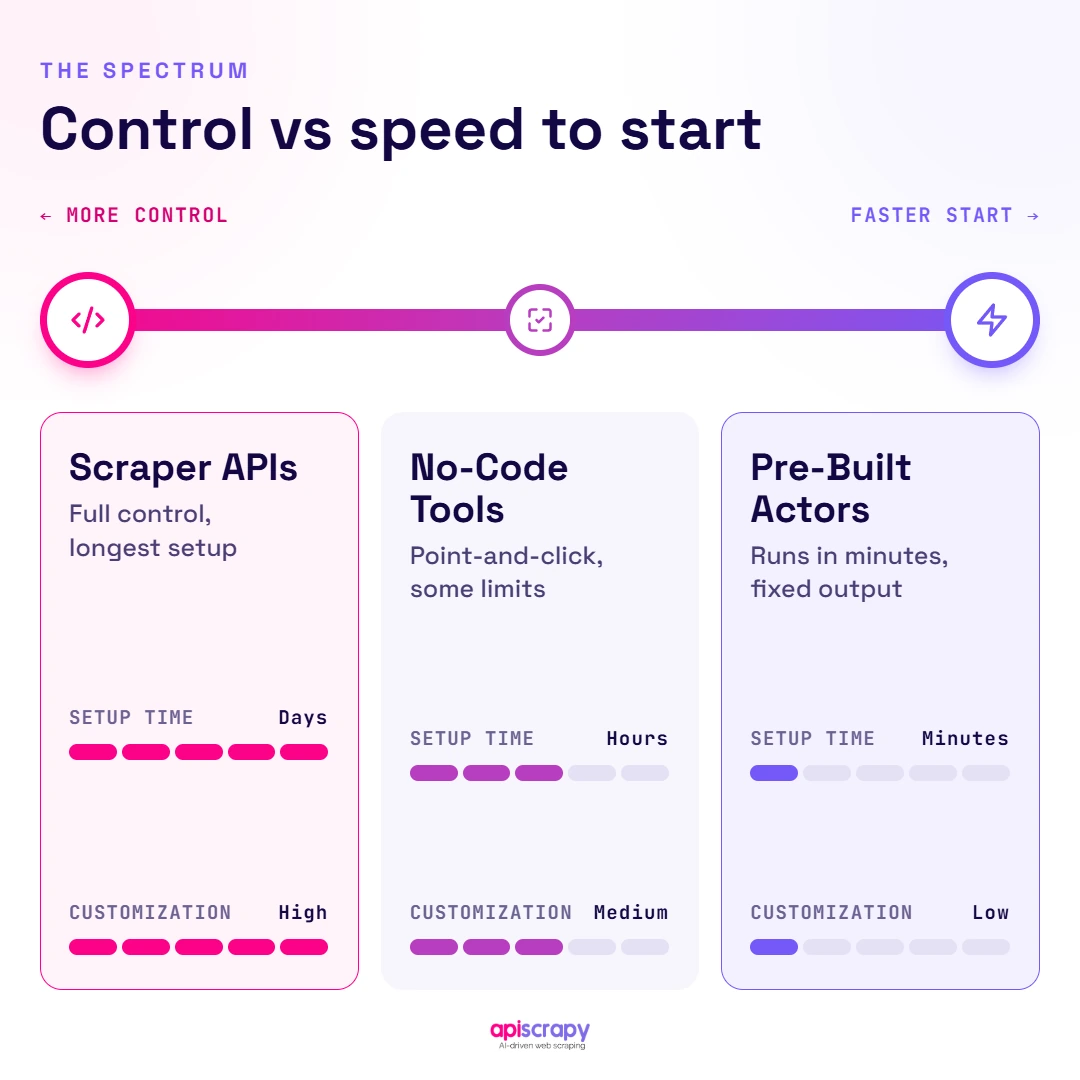
- Faster time to usable data, since a managed service is production-ready in days, not months
How Should You Evaluate Web Scraping Services for Enterprises?
Data Quality and Accuracy
Ask how the service validates extracted data, and whether structured QA checks run before delivery rather than after a customer reports bad data.
Scalability and Infrastructure
Confirm the service can absorb sudden volume spikes, such as a seasonal pricing push, without renegotiating your contract or your architecture.
Compliance and Legal Safety
Check how the provider handles robots.txt, rate limiting, and personal data exposure, since compliance failures at this stage become your legal exposure, not theirs.
Support and SLA Guarantees
Look for a named point of contact and a written uptime or delivery SLA, not just a support email address.
Integration and Customization
Verify the data lands in the format and destination you already use, whether that is a data warehouse, a BI tool, or a direct API feed.
What Is the Cost of Enterprise Web Scraping Services?
Pricing varies widely depending on volume, site complexity, and whether you want a fully managed service or raw infrastructure you maintain yourself.
| Pricing Model | Typical Range | Best For |
|---|---|---|
| Pay-as-you-go API access | $0.001 to $5 per 1,000 requests | Low-volume or developer-led projects |
| Monthly subscription | $49 to $999+ per month | Mid-size teams with predictable volume |
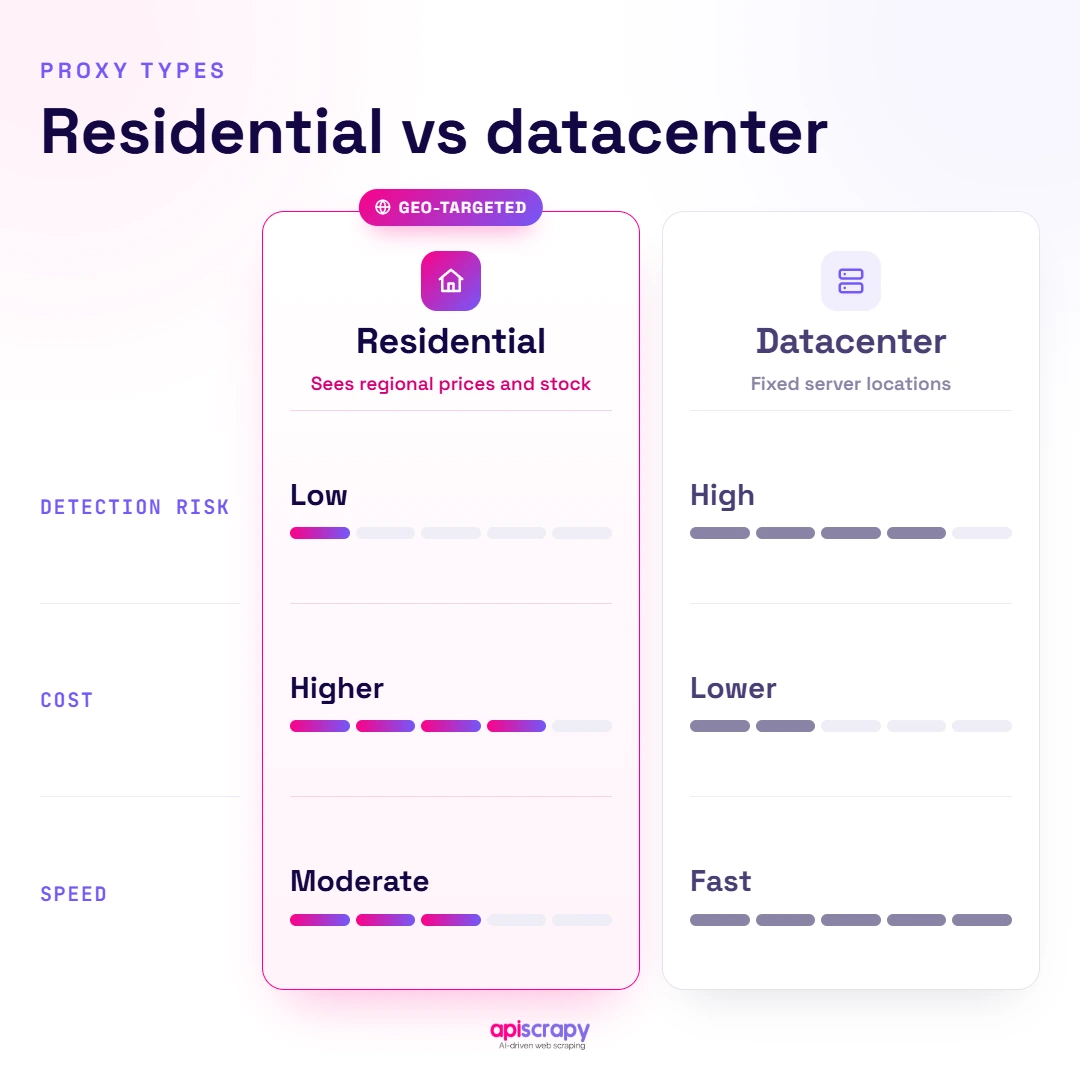
| Proxy or infrastructure-based | $4 to $14 per GB | Teams needing raw bandwidth and IP rotation |
| Managed enterprise service | Custom, often outcome-based | Enterprises needing SLAs, compliance, and zero maintenance overhead |
What actually moves the price is data volume, how much JavaScript rendering the target sites require, and how much compliance review and delivery SLA you need built in.
Self-service pricing pages rarely show the full picture, since maintenance time, proxy costs, and engineering hours to fix broken scrapers add real cost that never appears on an invoice.
How Do I Calculate ROI for Web Scraping in My Enterprise?
Start with a simple framework: the value your data generates, minus the total cost of getting it, divided by that total cost.
On the cost side, include the service fee, implementation time, and any ongoing maintenance your team still has to handle.
On the value side, count faster pricing decisions, competitive wins, reduced headcount needs, and revenue protected by catching market shifts early.
- Estimate the cost of your current approach, including salaries, infrastructure, and downtime
- Add the value generated: faster decisions, competitive wins, or new revenue opportunities
- Subtract the total service cost, including setup, maintenance, and support
- Divide the net gain by total cost to get your ROI percentage
Enterprises that shift from in-house builds to managed services typically see payback within the first two to three quarters, once engineering time is factored back in.
What Industries Benefit From Enterprise Web Scraping Services?
E-commerce and Retail
Dynamic pricing feeds and competitor catalog monitoring keep merchandising teams ahead of price changes across thousands of SKUs.
Travel and Hospitality
Fare and rate tracking across booking channels supports real-time pricing and availability decisions.
Finance and Investment
Alternative data feeds support market research and risk models that rely on signals outside traditional financial reporting.
Real Estate
Listing aggregation and valuation datasets help teams track inventory and pricing trends across markets.
Media and Market Research
Sentiment tracking and content monitoring at scale support brand research and competitive reporting.
Why Choose APISCRAPY for Enterprise Web Scraping?
APISCRAPY is best suited for enterprises that want production-ready data without owning the infrastructure, compliance review, or maintenance work behind it.
Its core strength is outcome-based pricing paired with a fully managed service model, so you pay for delivered data rather than credits or server time.
That positioning outperforms self-service tools for teams that lack in-house scraping engineers, since setup, monitoring, and fixes are handled end to end.
It fits enterprises past the pilot stage that need reliable, ongoing data feeds rather than a one-off project.
Whichever provider you choose, the goal is the same: help you find the pricing model and service that fits your scale, without paying for capacity you do not need.
Start Building Your Web Crawler Today
Conclusion
Enterprise web scraping pricing ranges from a few dollars a month to custom enterprise contracts, and the right choice depends on volume, compliance needs, and how much maintenance your team can realistically own.
Book a demo with APISCRAPY to get a pricing and ROI estimate built around your actual data needs, not a generic price list.
Frequently Asked Questions About Enterprise Web Scraping Pricing
What should you look for when choosing enterprise web scraping services?
Look for verified data quality processes, a written SLA, and compliance handling for robots.txt and data privacy rules. Pricing matters, but a service that goes down during a critical pricing window costs far more than the monthly fee ever will.
How much do enterprise web scraping services cost in 2027?
Costs range from roughly $49 a month for self-service APIs to custom, outcome-based contracts for fully managed enterprise services. The final number depends on page volume, JavaScript rendering complexity, and how much compliance and support coverage your business requires.
How can enterprise web scraping services scale to millions of pages without sacrificing data quality?
Managed services scale through distributed infrastructure, automated QA checks, and proxy rotation that adapts to blocking in real time. The key difference from DIY scripts is that quality checks run continuously, not only after a customer flags bad data downstream.
Is enterprise web scraping legal, and how do businesses manage compliance and data privacy?
Scraping publicly available data is generally lawful, but compliance depends on respecting robots.txt, rate limits, and applicable privacy regulations.
Enterprises manage this by choosing services with documented compliance processes, rather than assuming a script that runs today stays compliant tomorrow.
Should your business build an in-house scraping system or hire enterprise web scraping services?
Building in-house makes sense only if your team has spare engineering capacity and a long-term need for full infrastructure control. Most enterprises find a managed service reaches production faster and costs less once maintenance, proxy fees, and downtime are counted honestly.